

Sponsored ContentPartner ContentMon 29 Jun 26
How to Navigate Land Lease Community Planning in Victoria

Land lease communities have emerged as one of the more compelling development opportunities in Victoria’s residential sector.
Demand is strong, driven by an ageing population seeking affordable, low-maintenance living without sacrificing quality or community.
For developers who understand the regulatory landscape, that demand translates into a viable, scalable product.
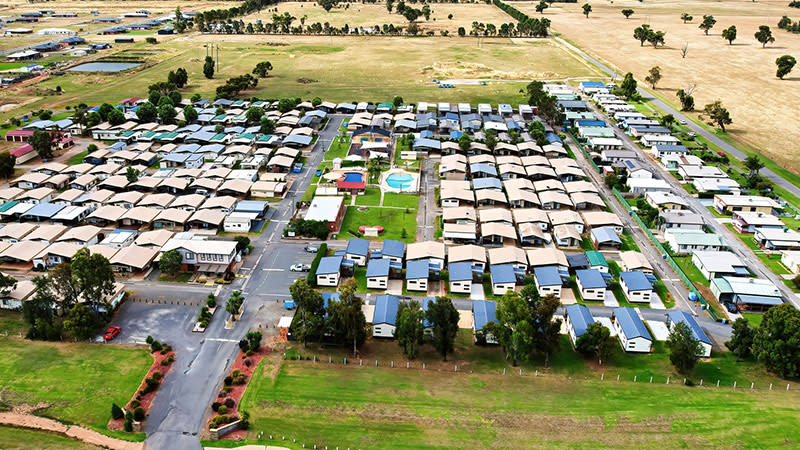
These communities occupy land in single ownership, developed with individual home sites alongside shared facilities such as community spaces, recreation areas and landscaped grounds.
Homes are freestanding, prefabricated and built off-site, allowing for efficient delivery at scale.
A dual regulatory framework
What makes land lease communities distinctive and what requires careful navigation is that they sit under two separate regulatory regimes: the planning scheme and the Residential Tenancies Act 1997 (RTA), under which they are classified as Part 4A Parks.
The key structural feature is that homes are movable and not fixtures on the land. Residents purchase the home, not the land beneath it.

This reduces the overall cost of entry for residents, removes stamp duty from the transaction and, because the Building Act does not apply to movable homes (except as to plumbing), building permits are not required for the homes themselves.
Design and installation of movable homes is governed by the Residential Tenancies (Caravan Parks and Movable Dwellings Registration and Standards) Regulations 2024.
Country Fire Authority guidelines also apply, setting separation distances between homes and other fire safety requirements.
Planning considerations
Under Victoria’s planning schemes, land lease communities are classified as a residential village or, broadly, land in single ownership containing multiple homes with communal facilities for residents.
Planning approval is required for the use and for the developer’s buildings and works such as roads, community infrastructure, drainage, landscaping and parking.
Individual homes, given their movable status, do not require separate assessment under clause 55.
In practice, submitting indicative site layout drawings and preferred home design options with the planning permit application is strongly advisable.
It provides council with the context needed to assess the proposal and reduces the risk of information requests that slow the process.
Practical complexities
Two issues warrant particular attention. The first is how the planning permit application fee is calculated in Victoria.
It is based on the cost of development, but the treatment of land lease communities under this methodology raises questions that benefit from experienced advice early in the process.
The second is whether an affordable housing contribution is required, which turns on site-specific factors and the applicable planning scheme provisions.
Neither issue is straightforward, but both are manageable with the right guidance at the right stage.
How Planning & Property Partners can help
Planning & Property Partners has advised on land lease community development across Victoria, working with developers and operators to navigate planning approvals, regulatory requirements and the practical complexities this sector presents.
For assistance, contact Planning & Property Partners director—legal, Amanda Johns.
The Urban Developer is proud to partner with Planning & Property Partners to deliver this article to you. In doing so, we can continue to publish our daily news, information, insights and opinion to you, our valued readers.





